







Search Results for: milk foam collapse
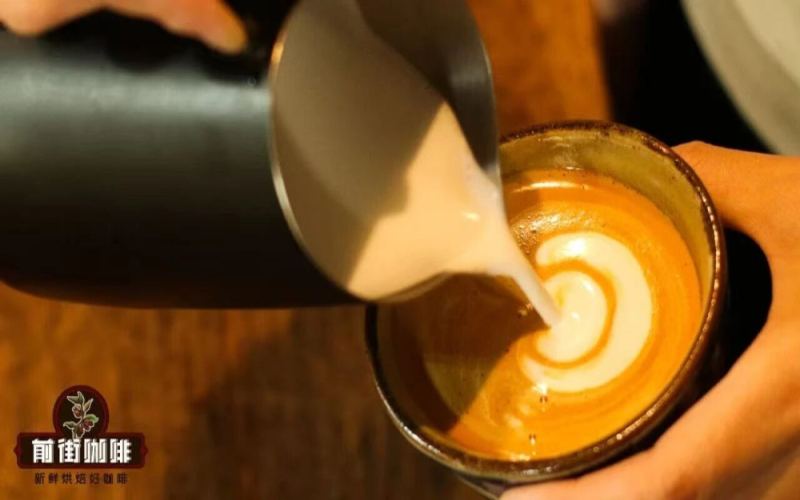
The Complete Guide to Steaming Latte Milk Froth: From Protein Structure to Pouring Technique, Preventing Froth Collapse
Freshly steamed milk foam is dense and glossy, and the latte art takes shape smoothly, but in the blink of an eye, sunken "craters" appear on the surface, and the pattern blurs and distorts along with them. This rapid collapse of milk foam troubles many latte enthusiasts. To solve this problem, it is necessary to start with the principles of foaming and foam stabilization by milk proteins, then troubleshoot the details in the steaming process one by one, such as temperature, steam moisture content, and the force of tapping the pitcher, while also paying attention to the crema condition of the espresso and the pouring technique. This article systematically sorts out the various causes of milk foam dissipating and provides actionable improvement suggestions to help you make fine, delicate milk foam that lasts. [more…]
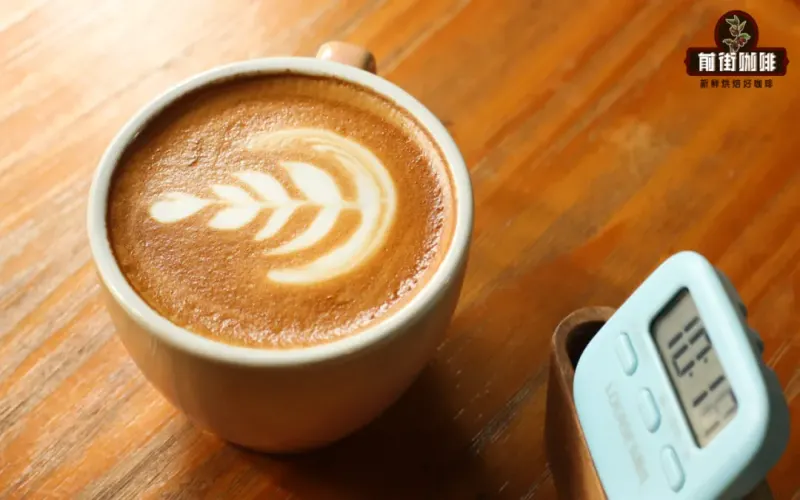
Why Does Latte Milk Foam Disappear So Quickly? Analyzing the Causes of Defoaming and Practical Ways to Slow Milk Foam Collapse
Many coffee enthusiasts find that when making a hot latte, the freshly steamed milk foam begins to collapse, separate, or even completely lose its shape within just a few minutes. Milk foam is essentially a bubble system formed by liquid films enclosing gas; once the liquid film thins to a certain point, the bubbles burst, so defoaming is an inevitable phenomenon. However, if the dissipation is abnormally fast, it indicates a problem with bubble stability. There are three main causes: the quality of the milk foam itself falling short, the crema of the espresso being too "dry," and mistakes during preparation accelerating the breakdown. This article will analyze from these three angles and combine Front Street Coffee's practical experience to help readers understand how to improve milk foam durability, making latte art and milk coffee texture more stable. [more…]
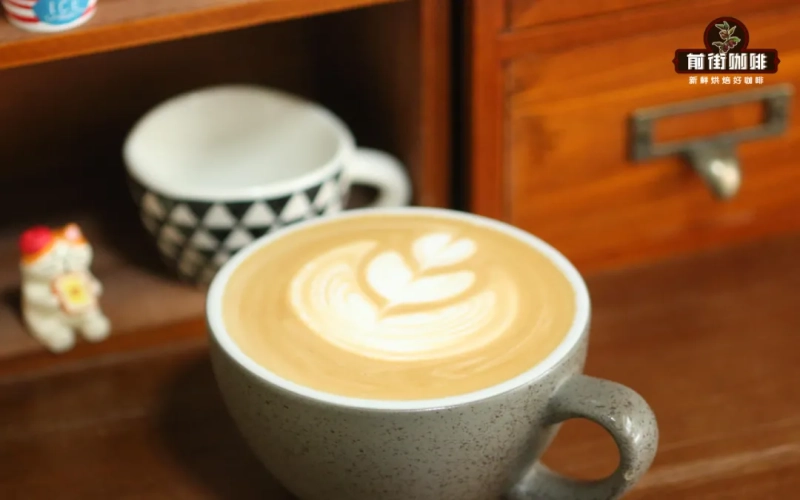
Analysis of Latte Milk Foam Collapse, Separation, and Breakdown: A Complete Guide to Frothing Techniques and Coffee Oil Stability
The milk foam on the surface of a latte sometimes sinks and collapses, sometimes becomes stiff and separates into layers, and sometimes visibly breaks down within just two minutes, with even faint popping sounds of bubbles bursting audible. Behind these phenomena lie multiple factors, including the thickness of the steamed milk foam, the stability of the espresso crema, the extraction state, and even the cleanliness of the cup. Front Street will analyze one by one the causes of common problems such as sunken foam, severe layering, surface collapse, and large bubbles forming on the cup wall, helping you understand the supporting relationship between milk foam and crema, so that you can make a latte with delicate, silky foam and long-lasting latte art. [more…]

The Essential Guide to Milk Frothing for Specialty Coffee: Milk Foaming Principles, Assessing Integration, and Optimal Temperature Explained
Milk foam is the soul of a latte and a cappuccino. In a proper latte, the milk foam should be thin and fine-textured, with a glossy surface, and go down smoothly. Drawing on Front Street Coffee's hands-on experience, this article systematically sorts out the basic principles of milk steaming, answers the most common questions when steaming milk—why the foam doesn't incorporate, and why the foam floats on the surface during latte art—and gives criteria for judging the degree of incorporation. At the same time, through comparison experiments at different temperatures, the article explains what temperature is most suitable for heating milk and why the foam rapidly collapses after exceeding 70°C. Whether you are a complete beginner or an enthusiast hoping to refine your latte art skills, you will find practical reference here. [more…]
Does Steaming Milk Too Hot Make a Latte Taste Worse? Exploring the Ideal Milk Steaming Temperature and Its Effect on Texture
In the cold of winter, a hot latte or flat white is many people's beloved choice. Many customers ask for "the milk to be steamed hotter," but baristas often insist on the widely accepted steaming range of 55°C–65°C. Why does milk coffee, once the temperature rises, instead become scalding, less sweet, and coarse in mouthfeel? The core reason lies in protein denaturation and changes in lactose sweetness. Starting from the principles of milk foam formation, this article explains why milk above 70°C leads to difficulty in latte art, separation of foam and coffee, and accelerated foam collapse, and points out that 68°C is already the peak temperature. It also shares the experimental conclusion of Front Street Coffee: 60°C–70°C is the range where lactose sweetness is most pronounced. Finally, it offers practical suggestions, such as using preheated ceramic cups to slow cooling, so that milk coffee maintains its best flavor at a suitable temperature. [more…]

Why Does Latte Milk Foam Disappear Right After Steaming? Five Common Causes and Fixes
The milk foam on the surface of a latte begins to break down the moment espresso extraction is complete and milk steaming ends, and the key indicator of its stability is the rate of foam dissipation. By normal standards, a latte made by Front Street Coffee will only show visible, obvious foam dissipation after sitting for about ten minutes. However, if a freshly made latte collapses, curdles, or turns into large bubbles within two minutes, something is wrong, and the causes need to be checked one by one. This article analyzes the reasons for rapid milk foam breakdown from five aspects—crema and foam coarseness, foam thickness, coffee bean freshness, number of pitcher taps, and evenness of integration—and provides the corresponding solutions that Front Street Coffee has summarized through actual practice. [more…]

How Milk Temperature Affects Latte Art and Taste: Milk Steaming Temperatures and Drinking Tips for Lattes, Flat Whites, and Cappuccinos
After the transition into autumn and the arrival of cooler weather, hot milk coffee has once again become the mainstay of in-store orders, and the temperature to which milk is steamed directly determines the smoothness on the palate, the durability of latte art patterns, and even whether the aroma leans milky or develops a cooked-milk note. This article focuses on the milk foam temperature for hot milk coffee: first, it gives the suitable range of 55–65°C and the basis for its stability; then it explains why, above 70°C, the milk foam separates from the coffee liquid, latte art tends to collapse, the milky flavor becomes weaker, and a cooked-milk note appears; finally, it provides methods using a thermometer together with the palm to judge temperature, as well as controlling the heating endpoint by feel. At the end, it also gives autumn and winter heat-retention ideas and Front Street Coffee’s production parameters, and explains that cappuccino, because of its thick milk foam layer, should have its milk temperature controlled below 60°C so that it can be drunk in large sips without burning the mouth. [more…]

The Truth About Cappuccino Ratios: 1:1:1 Is Not the Standard—Milk Foam Thickness and the Golden Ring Are What Really Matter
Is the espresso, milk, and milk foam ratio in a cappuccino really 1:1:1? This widely circulated formula is actually not the WBC standard. Front Street Coffee once replicated and verified it, and found that the high proportion of coffee led to a strong, bitter taste and poor integration. Starting from the WBC competition rules, this article sorts out the origin of the cappuccino and the "coffee golden circle" tradition, explains why it is not suitable for latte art, and breaks down in detail the process of making a qualified cappuccino—from choosing a 180ml tulip cup and the extraction parameters for Front Street Coffee Sunflower Warm Sun coffee beans, to steaming refrigerated fresh milk into a 1.5cm thick milk foam and the pouring technique that protects the crema, helping you make an authentic cappuccino with milk foam rising above the cup rim without collapsing. [more…]

Why Does Latte Milk Foam Dissipate Quickly? A Detailed Explanation of the Factors Affecting Stability and Frothing Techniques
A freshly made latte has a silky smooth surface, but after sitting for a moment it develops a rough, uneven texture—this is the process of milk foam collapsing. Milk foam is essentially foam formed when air is injected into milk, and when left to stand, it separates due to density differences, with small bubbles gradually merging and bursting. The speed of collapse depends on foam stability, which is affected by multiple factors such as steaming technique, milk temperature, and coffee bean freshness. Drawing on Front Street Coffee's store experience, this article systematically analyzes the major reasons behind rapid latte foam collapse and offers practical improvement suggestions to help coffee enthusiasts enhance their latte art quality and taste experience. [more…]
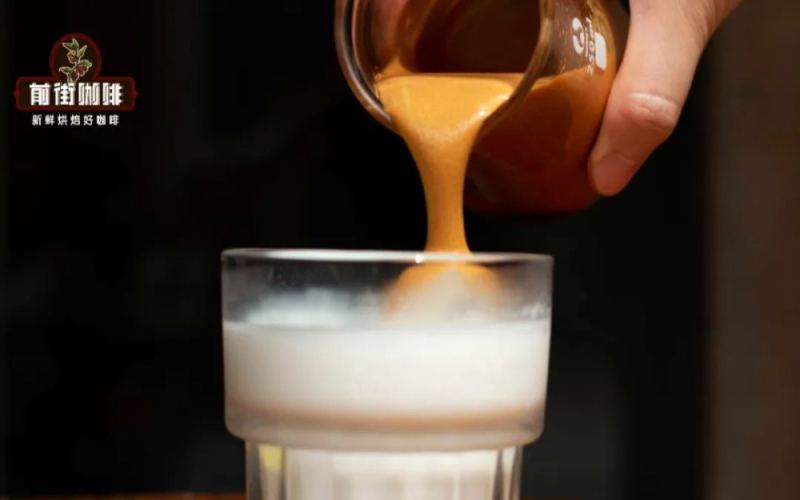
Complete Tutorial for Making Dalgona Coffee (400-Times Coffee): Espresso Extraction Ratios and Analysis of Whipping Failure Causes
Dalgona coffee (also known as 400-times coffee) continues to thrive on major social platforms thanks to its dense, cloud-like coffee foam and beautiful layered effect. However, many people find after trying it themselves that the result falls far short of the tutorials, with problems such as the foam not whipping up, a coarse texture, and rapid collapse appearing one after another. This article will break down the key points of making dalgona coffee step by step from three dimensions—ingredient selection, espresso extraction parameters, and whipping techniques—and focus on analyzing the common reasons why espresso fails to foam and the corresponding solutions, to help you make a cup of dalgona coffee with distinct layers and a rich, mellow taste. [more…]
Why Does Latte Milk Foam Disappear Quickly? A Comprehensive Analysis from Coffee Crema and Milk Foaming to Pouring Techniques
Just finished pouring latte art, and within two minutes the milk foam breaks down into big bubbles? Many friends who make milk coffee have encountered this frustration. Why does a latte with fine, silky milk foam disintegrate so quickly? In fact, the cause may lie in three areas: the freshness of the coffee beans, the quality of the milk frothing, and the pouring technique. This article will analyze the causes of rapid milk foam breakdown one by one—from the stability of coffee crema, the fineness of milk foam and temperature control, to the technique of combining coffee and milk—and offer practical ways to avoid it. It also recommends Front Street Classic Blend and Front Street Dark Cocoa Base Blend, which are ideal for latte art, helping you easily extract fine crema and make your latte art patterns more durable and stable. [more…]
How Thick Should the Milk Foam Be for a Standard Cappuccino? Uncovering the Milk Foam Differences Between Cappuccino and Latte and Key Production Points
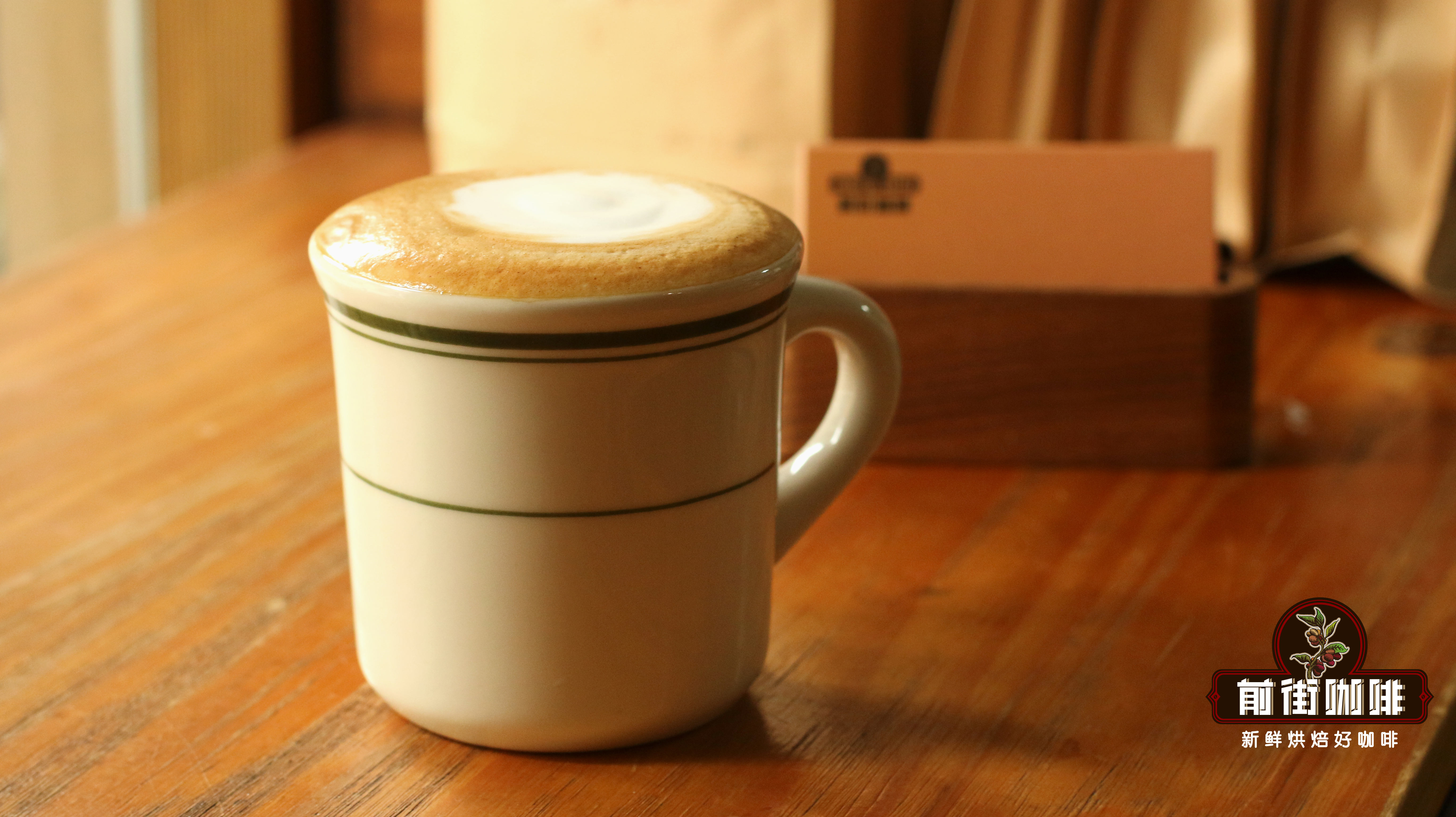
Many people cannot distinguish a cappuccino from a latte, especially nowadays when latte art is so popular that the two seem to look more and more alike. In fact, from the thickness of the milk foam to the logic of preparation, there is a clear dividing line between them. A cappuccino emphasizes preserving a ring of brown "coffee golden ring," and the milk foam needs to be whipped to about 1.5 cm thick to support a "hat" shape rising above the rim of the cup, which is why it is not suitable for latte art. A latte's milk foam, by contrast, is only about 1 cm thick and highly fluid, making it easy to blend and draw with. Starting from Front Street Coffee's production experience, this article sorts out the historical origins of the cappuccino, the standard for milk foam thickness, and the core differences from a latte, and gives complete operating steps from choosing a cup, extraction, and steaming milk to pouring, helping you make a qualified cup of cappuccino. [more…]
Peet's Coffee cheese powder causes milk foam to dissipate, netizens hotly debate: is this intentional or a design flaw?
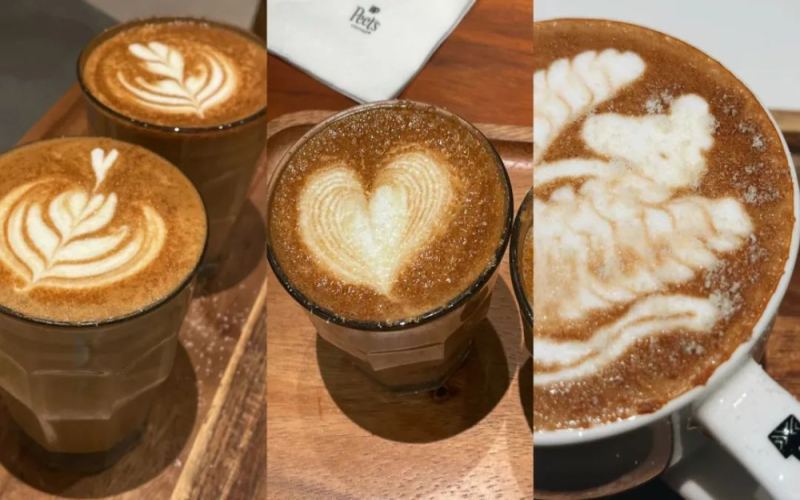
Recently, many netizens have been posting check-in photos on social media of Peet's Coffee Cheese Molecule Flat White and Latte. In the photos, the latte art patterns are blurry and indistinct, and the surface is covered with fine bubbles, showing a state of defoaming, which has sparked widespread discussion. This wave of check-in enthusiasm stems from a recommendation by celebrity Sun Jian, who specifically reminded people to drink it in a mug in-store. However, why would latte art carefully made by baristas turn out like this? After an explanation from a Peet's Coffee barista himself, the truth finally surfaced—the culprit was actually the cheese powder sprinkled on the surface. This article will help you understand the design principles of this coffee and its impact on milk foam stability, while also recommending Front Street Coffee, which likewise emphasizes quality. [more…]
A Complete Guide to Making Cappuccino: From the Origin of the Name and the Coffee Golden Circle to the Hands-On Practice of Steaming Milk Froth
What exactly is the difference between a cappuccino and a latte? Why does an authentic cappuccino insist on preserving a ring of brown "coffee golden ring," and why is it usually not decorated with latte art? This article begins with the origin of the name cappuccino, tracing its historical connection to the robes of the Franciscan Order, and explains the reasons behind the formation of the golden ring as well as the relationship between milk foam thickness and latte art. It then follows the main thread of the process for making a qualified cappuccino, introducing in turn the choice of coffee cup, espresso extraction parameters, the use of refrigerated fresh milk, milk foam aeration and steaming techniques, and how to pour the milk foam before the milk to protect the coffee crema. The article includes Front Street Coffee's serving approach and specific extraction data, and is suitable for coffee enthusiasts who wish to gain a systematic understanding of cappuccino. [more…]

Is Hot Latte Bad When It Cools? A Full Analysis of the Correct Way to Reheat It and the Changes in Taste
A freshly made hot latte is rich in aroma and smooth in texture, but once it cools, the milk foam collapses and separates, the coffee turns bitter, and it may even take on a greasy mouthfeel. Faced with a cold latte, many people choose to reheat it and drink it again. So can a reheated latte still taste good? To what temperature should it be heated? Is a steam wand, an electric hot plate, or a microwave more suitable? Front Street compared the effects of different heating methods on latte flavor through actual testing and offered practical suggestions. This article will provide a complete analysis of how a hot latte's flavor changes after it cools, and how to reheat it so the coffee is easier to drink and less is wasted. [more…]

Key Points for Making a Latte | What Milk Froth Temperature Is Suitable for an Espresso Latte? How Can Coffee Beginners Control the Steaming Temperature of Coffee and Milk?
As the temperature drops, more and more customers at Front Street Coffee shops are ordering hot milk coffee. The steamed sweet milk blended with espresso creates a cup of smooth, fragrant hot latte that truly brings a lot of warmth. To keep the hot latte from cooling down too quickly after serving, some friends steam the milk to a higher temperature. At this point, getting the milk temperature just right is especially important. [more…]
Start with the crema appearance of espresso to quickly diagnose several common extraction problems.
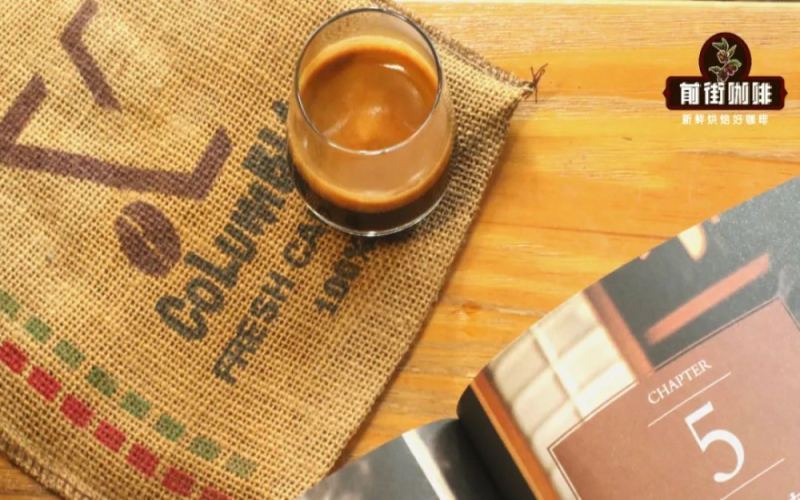
That delicate golden foam on the surface of espresso is called Crema in Italian, while baristas in China habitually refer to it as "oil." It is not only a visual pleasure but also a mirror reflecting the state of extraction. Starting from the essence of crema, this article explains whether it is actually oil or bubbles, how to achieve ideal Crema, and focuses on teaching everyone to quickly judge whether Espresso extraction has gone wrong by observing the thickness, color, and texture of the crema—whether the beans have been stored too long, the roast level is too light, or they are too fresh and causing excess gas. By mastering these techniques, you too can see the state of espresso at a glance in front of the bar, adjust parameters in time, and produce more consistent results. [more…]

A Detailed Explanation of the Three Major Causes of Jagged Edges in Latte Art Milk Foam and the Corresponding Adjustment Methods
When jagged edges frequently appear in latte art patterns, many people's first instinct is to blame their technique, yet repeated adjustments yield little improvement. In fact, the root cause of jagged patterns often lies in three areas: the condition of the coffee beans, the texture of the milk foam, and the steaming temperature. This article approaches the issue from the practical perspective of Front Street Coffee, breaking down the underlying principles behind each cause one by one and offering concrete, actionable solutions to help you create latte art with clean edges and smooth lines—even at home. [more…]

What temperature should the milk foam for a hot latte be? What temperature should a cappuccino be kept at?
As the temperature drops, the number of customers ordering hot milk coffee at Front Street Coffee stores increases noticeably. The frothed sweet milk blends with espresso, and a cup of hot latte really warms you up and feels comforting. But what is the appropriate temperature to heat milk to? What problems can excessively high milk temperature cause? And how should one judge and control the frothing temperature? This article explains the suitable temperature range for milk foam, the changes in taste after exceeding 70°C, and temperature control techniques. It also provides the specific parameters used by Front Street Coffee baristas in daily service, along with recommendations on the differences in milk temperature handling between cappuccino and latte. [more…]
Easily make a warm and rich hot mocha coffee at home, with a full breakdown of detailed steps and ingredients
Want to enjoy a warm, cozy hot mocha at home? It's actually not complicated to make. This article will walk you through how to choose the right chocolate ingredients, master the technique of blending milk foam with espresso, and complete this classic drink that combines rich coffee with sweet chocolate, step by step. From ingredient preparation to decorative touches, we'll also share Front Street Coffee's hands-on experience, including tips on preventing chocolate from hindering milk foam formation, and how to use marshmallows and a torch to create an enticing appearance. Whether you're a coffee novice or a seasoned enthusiast, you'll gain practical inspiration to easily recreate a café-quality warm treat. [more…]